

Cultural Risk Intelligence: AI, Mixed Neurotype Teams and the Leadership Challenge
In a recent insight, we discussed how AI is influencing workplace behaviour and amplifying psychosocial risk. As AI becomes more embedded in day-to-day work, it is also reshaping how work is experienced, how teams collaborate and what effective leadership looks like. These shifts are especially important in mixed neurotype teams, where differences in how people engage with AI may create both new opportunities and new cultural risks. In this context, inclusive leadership is likely to become a stronger determinant of team effectiveness, cultural health and performance.
AI Adoption Is Uneven Across the Workforce
A defining feature of workplace AI adoption is that employees are not experiencing the AI-enabled workplace in the same way. It is increasingly evident the experience is variable. Gallup (2026) research shows that while 91% of organisations claim to use AI, only 21% of professionals report using it weekly. This discrepancy has been attributed to factors including limited training, concerns regarding AI-slop (low quality or inaccurate output) and a reliance on ‘bring your own’ rather than employer provided AI tools.
Neurodivergent Talent Is Emerging as a Key AI Advantage
Against this backdrop, neurodivergent employees are emerging as one of the strongest adopter groups in the AI-enabled workplace. The EY Global Neuroinclusion at Work Study 2025 found that neurodivergent employees were 55% more likely to use AI in their workplace compared to neurotypical colleagues, with 79% already doing so. For organisations, the implications are significant. While neurodivergent employees have to date been an under-recognised talent pool, AI presents an opportunity to unlock this potential.
Importantly, this is neither a small nor niche talent pool. Recent data suggests that 12%-13% of the current Australian workforce identifies as neurodivergent (ABS, 2026). Further, the 2025 APS Census showed that 22% of employees either identified as neurodivergent or suspected they may be. Indicative of our future talent pipeline in Australia, it is estimated that currently 15%-20% of school students are neurodivergent also (Torrens University Australia, 2025).
Inclusive Leadership Will Shape Who Benefits from AI
Whether organisations realise the benefits of neurodivergent talent in AI-enabled work will depend heavily on inclusive leadership within mixed neurotype teams. Unsurprisingly, line manager behaviour and psychological safety are identified as the strongest drivers of neuroinclusion in team settings (EY, 2025). Notably, these are not factors unique to neurodivergent employees. Psychological safety, team climate and a positive line manager relationship are well established drivers of engagement and performance regardless of neurotype. As AI-enabled work becomes more digitally mediated and requires different cognitive skills, these capabilities will increasingly distinguish high performing leaders.
Cultural Risk Intelligence Will Become a Critical Leadership Capability
In this context, cultural risk intelligence, or the ability to notice, interpret and respond to emergent behaviours before they cause harm, will become a more important leadership capability. The EY research found that poor workplace relationships and microaggressions were the strongest drivers of intent to leave for neurodivergent professionals. This is significant because many of these behaviours are subtle, cumulative and context-dependent. Leaders with strong cultural risk intelligence are better able to recognise these dynamics and intervene early. They are more likely to create the conditions for neuroinclusion, where employees of all neurotypes experience psychological safety, a genuine sense of belonging and support to perform at their best. In this sense, the strengths of different neurotypes become complementary rather than competing, and thereby enable better innovation, decision making and problem solving within a team.
What Organisations Should Be Building Now
As AI continues to transform how work is performed, it will simultaneously transform what distinguishes the most successful leaders. More specifically, organisations that invest now in building cultural risk intelligence will be best positioned to unlock the capability, innovation and performance potential that mixed neurotype teams offer.
We are increasingly supporting our clients to embed these capabilities through our leadership development programs. If this is an area of focus for your organisation, we would welcome a discussion.
Claire Jenkins
Senior Consultant
Azuhr
 PREV
ARTICLE
PREV
ARTICLE
Related News
-
27.07.2026
A First Nations Perspective: Cultural Safety in Workplace Investigations

-
16.07.2026
Celebrating 50 Years of Deadly: Beyond NAIDOC Week
-
24.06.2026
Whistleblowers in Focus: From a Personal Work Related Grievance to a Protected Disclosure
-
02.04.2026
Psychosocial Hazards Checklists for People Managers
-
03.03.2026
Why Respect at Work Training Needs to Be Renewed, Not Repeated
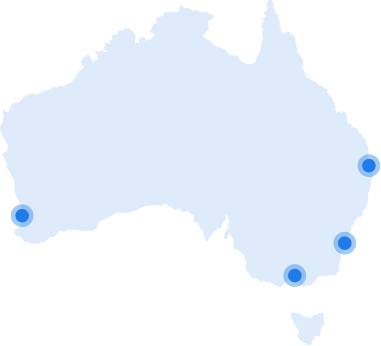
Our Sydney Office
- Phone: 1300 909 819
- Address: Level 5, 1 Bligh Street, Sydney, NSW 2000
Our Melbourne Office
- Phone: 1300 909 819
- Address: Level 9, 140 William Street, Melbourne, VIC 3000
Our Perth Office
- Phone: 1300 909 819
- Address: Level 29, 108 St Georges Terrace Perth WA 6000
Our Brisbane Office
- Phone: 1300 909 819
- Address: Level 7, 300 Queen Street, Brisbane, QLD 4000
OUR OFFICES
Where To Find Us
We’re here to help you navigate the human resources and employee relations landscape, with offices and consultants across Australia.



Get In Touch
Let’s Work
Together
Drop us a line
We’re here to help!
Clear, concise HR delivered by a team of professionals you can trust.


Delivering end-to-end HR solutions for employers.