

Celebrating 50 Years of Deadly: Beyond NAIDOC Week
I want to start by acknowledging the traditional custodians of the land on which we gather today, and pay my respects to Elders past, present and emerging.
Last week marked NAIDOC Week 2026. NAIDOC Week in its current form traces back to the mid-1970s, a period of extraordinary activism. Land rights movements gaining momentum. Political voice growing. Aboriginal and Torres Strait Islander peoples demanding, not asking, to be seen, heard and recognised on their own terms.
NAIDOC Week is an invitation to genuinely celebrate First Nations excellence. To understand the history that sits behind this week. To make sure the weight of educating, explaining and advocating is not left, once again, to our First Nations colleagues.
This year, the theme was ‘Celebrating 50 Years of Deadly’. If you’re not familiar with the word deadly in an Aboriginal context, it does not mean what you might think. In Aboriginal English, deadly means outstanding, excellent and powerful. It is a word that belongs to community: warm, proud and on First Nations terms. In the context of this years theme, Celebrating 50 Years of Deadly, it captures far more than a milestone. It speaks to fifty years of culture, resistance, leadership and joy, carried by Aboriginal and Torres Strait Islander peoples who have continued to be seen, heard and recognised on their own terms.
What strikes me about this theme is the power of the word celebrating. Not commemorating. Not reflecting. Celebrating. It is not a theme about survival alone, though survival in the face of what Aboriginal and Torres Strait Islander peoples have faced is extraordinary. It is a theme about excellence, joy and fifty years of proof that culture is not only alive, it is thriving.
National Reconciliation Week’s theme this year was All In. A call for all Australians to step off the sidelines and commit, not once a year, but every single day. I think the two themes speak directly to each other, and tell a fuller story. They remind us what was here before reconciliation became part of the national conversation, and they ask a question we cannot afford to ignore: what have we learned in fifty years, and have we changed fast enough?
So, in light of NAIDOC Week 2026, how can we meaningfully continue to celebrate fifty years of deadly? Not as a tick in a box. But as a real, considered, ongoing act of recognition and respect.
Where organisations show genuine commitment
Across my career in the public, corporate and not-for-profit sectors, I have seen many organisations approach their commitment to First Nations reconciliation and recognition with genuine intent and goodwill, particularly at leadership level.
The workplaces where I have felt truly valued, appreciated and supported are those where commitment to First Nations people is visible, practical and embedded. It shows up in the CEO and leadership team role modelling that commitment, in leaders being visibly engaged, in Acknowledgement of Country being part of meeting culture, and in NAIDOC Week and Reconciliation Week being marked in meaningful ways. It is also reflected in employees being given time and encouragement to attend events, First Nations employees being represented at all levels, and a First Nations lens, voice and perspective being central to decision making.
When intent, policy and practice do not align
Despite good intent, the disconnect is often felt most clearly in the gap between what an organisation says, what its policies require and what people experience in practice. This becomes evident when a Reconciliation Action Plan sits in a drawer, cultural awareness is addressed during induction but never revisited or built on, organisational policies and procedures continue to reinforce systemic barriers, or First Nations employees are recruited for diversity but then left to carry the burden of education, advocacy and cultural knowledge.
It is particularly difficult when First Nations employees, including those in customer-facing and non-customer-facing roles, are treated as the cultural expert on all matters, creating an additional cultural and colonial load alongside their core role. This is especially disappointing when organisations recruit for cultural knowledge and lived experience but do not recognise that knowledge as a valued and core capability. I have experienced this firsthand, and it is exhausting for the people carrying it.
Another place this disconnect is felt is in psychological safety. First Nations employees have told me firsthand that they self-censor, do not always feel able to bring their whole selves to work, and often wait to see whether an organisation’s stated values are reflected in practice before they feel able to trust them. I have also felt the need to do the same in some organisations and industries I have worked in. The gap between stated values and lived experience is where organisations risk losing people, particularly First Nations employees who do not feel culturally safe.
For me, and for many First Nations people I have worked with, the silent struggle is the impact of intergenerational trauma, which is too often not known, talked about or understood. My mum was born on the Yorke Peninsula, South Australia on the ‘Pt Pearce Mission’, that is only one generation ago. My mum’s paternal grandfather was born on the ‘Raukkan/Pt McLeay Mission’, near Lake Alexandrina, South Australia.
Relationship before process
Meaningful engagement starts with relationships, before any agenda or process. It requires genuine listening, learning, sharing space and allowing generous time. It also means recognising that community accountability and organisational accountability are not the same thing, and that First Nations employees are often required to navigate both at the same time. This can place additional pressure on the employee and create tension within the workplace. An Elder once said to me ‘I cannot take my Aboriginal hat off at the end of the day – I am still obligated to my family and community so I am forever walking in two worlds’. This is why engagement must be ongoing, not a consultation that happens once before a strategy is written and then goes quiet.
The barriers to this kind of engagement often reveal whether an organisation’s values are truly operational. They can include tokenism, where First Nations people are visible only during cultural moments; the absence of cultural leave; performance frameworks that do not recognise cultural responsibilities or capabilities; well-meaning but culturally unaware leadership; and a lack of consequence or change when poor behaviour occurs. When organisations do not act, people quickly learn that the values being promoted are aspirational, not operational.
These barriers do not only affect engagement. They shape whether First Nations employees feel culturally safe at work.
Cultural safety in practice
Cultural safety is not a training program. It is the creation of an environment where a First Nations employee can come to work as their full self, proud of their identity, culture, responsibilities to family and community, and their own perspective. They should not have to minimise, explain or defend any of it.
It also requires organisations to understand that silence is not agreement, and absence is not disengagement. Cultural safety must be experienced in practice, not simply stated as a value.
This cultural capability and understanding benefits everyone, not only First Nations employees. When organisations build culturally safe and responsive workplaces for First Nations people, they also strengthen psychological safety for all employees. Workplaces that enable people to bring their whole self, perspective and voice to work, question the status quo and raise concerns without fear are better placed to build trust, inclusion and safety across the organisation.
Moving Beyond Awareness to Action
Organisations that do this well do not treat First Nations culture, reconciliation or cultural safety as issues for First Nations employees to carry. They treat them as leadership responsibilities. This requires a shift from diversity program to leadership accountability, where reconciliation is embedded into the way decisions are made, people are led, capability is developed and progress is measured.
Awareness is the beginning, not the destination. Practical action means embedding cultural capability into leadership and capability frameworks, not limiting it to induction. It means building role-specific cultural capability over time, reviewing policies, processes and services through a cultural lens, and ensuring cultural governance is built into how the organisation operates.
It also means creating genuine career pathways for First Nations employees, not just entry-level representation. First Nations representation needs to be visible at all levels of the organisation, including senior leadership, because ‘you can’t be it, if you can’t see it.’ Just as importantly, First Nations employees need a meaningful voice in decisions that affect them, their colleagues, their communities and the customers or clients the organisation serves.
Finally, leaders need to be held accountable. Cultural capability should be part of how leadership performance, development, progression and remuneration are considered
How Azuhr supports organisations
Azuhr brings First Nations expertise together with deep workplace, people and culture experience to support organisations to move beyond awareness and into practical, sustained action. We help organisations strengthen cultural capability, embed First Nations voice and perspectives into workplace systems, and build culturally safe and responsive environments for First Nations employees, leaders, customers and communities.
This can include support with:
– Reconciliation Action Plans & Reconciliation initiatives
– Cultural awareness and cultural capability programs
– First Nations employee forums
– Leadership discussions and workshops
– Cultural support for First Nations employees
– Capability upskilling for leaders managing and supporting First Nations employees
– Embedding First Nations voice and perspectives into people and culture strategies
– First Nation’s stakeholder engagement
– Cultural representation on recruitment panels
– Reviewing strategies, policies, procedures and service offerings through a First Nations lens
– Supporting cultural governance and culturally responsive workplace practices
If you are interested in how Azuhr’s First Nation’s team can support your organisation, please get in touch.
Loretta Romeo
Senior Consultant
Azuhr
 PREV
ARTICLE
PREV
ARTICLE
Related News
-
15.10.2026
Workplace investigations: Balancing the process and the people

-
27.07.2026
A First Nations Perspective: Cultural Safety in Workplace Investigations
-
24.06.2026
Whistleblowers in Focus: From a Personal Work Related Grievance to a Protected Disclosure
-
11.05.2026
Cultural Risk Intelligence: AI, Mixed Neurotype Teams and the Leadership Challenge
-
02.04.2026
Psychosocial Hazards Checklists for People Managers
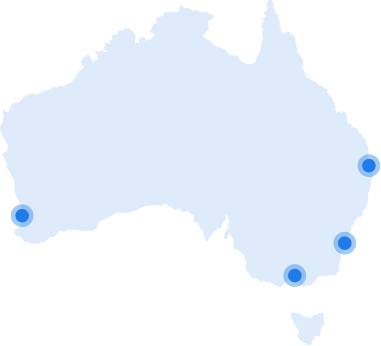
Our Sydney Office
- Phone: 1300 909 819
- Address: Level 5, 1 Bligh Street, Sydney, NSW 2000
Our Melbourne Office
- Phone: 1300 909 819
- Address: Level 9, 140 William Street, Melbourne, VIC 3000
Our Perth Office
- Phone: 1300 909 819
- Address: Level 29, 108 St Georges Terrace Perth WA 6000
Our Brisbane Office
- Phone: 1300 909 819
- Address: Level 7, 300 Queen Street, Brisbane, QLD 4000
OUR OFFICES
Where To Find Us
We’re here to help you navigate the human resources and employee relations landscape, with offices and consultants across Australia.



Get In Touch
Let’s Work
Together
Drop us a line
We’re here to help!
Clear, concise HR delivered by a team of professionals you can trust.


Delivering end-to-end HR solutions for employers.